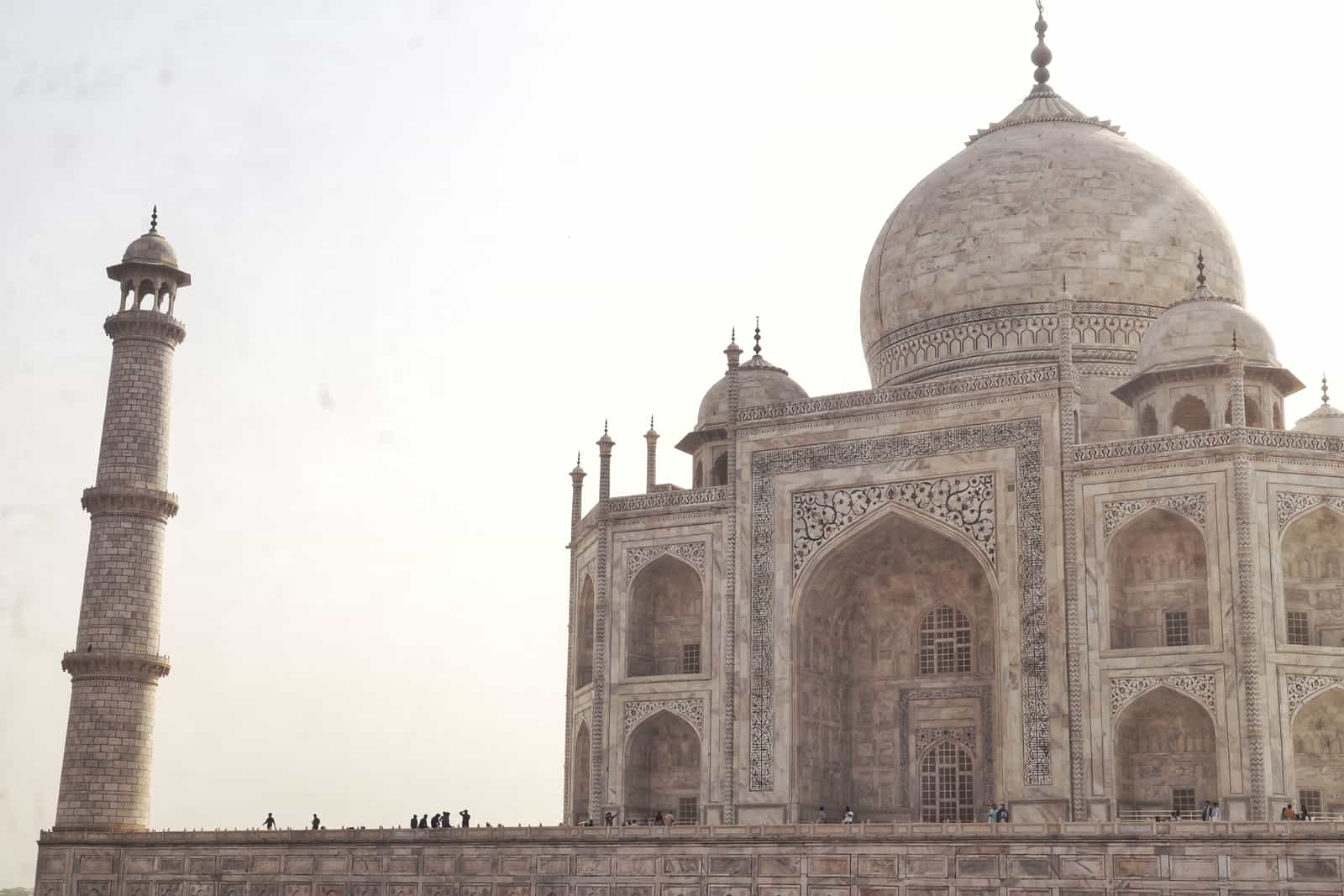
India e-Visa 2026: Types, Fees, Eligibility and Step-by-Step Application
Table of contents
Author: Équipe IziVisasReviewed on October 29, 2026Last update: Oct 2026Reading time: 8 minWritten with AI assistance: our method
Summary
30-day e-Tourist at $10-25, 1 year at $40, 5 years at $80: the complete guide to India's e-Visa in 2026. Eligible nationalities (and who must go through the embassy), step-by-step application on the official site, required documents and fake-website scams to avoid.
India has made its electronic visa the standard gateway into the country: tourism, business, medical care, studies, transit, almost everything now runs through the e-Visa. Around 175 nationalities can get their authorisation without setting foot in an embassy, directly on the official portal indianvisaonline.gov.in, within a few days and for a fee starting at $10 depending on the season. But behind this simplicity hide three very real traps: prices that change with the time of year and your nationality, an eligibility list that still excludes several African countries, and unofficial websites charging far more than the official fee. Here is the complete guide, verified in late October 2026 on the official portal.
e-Visa types and their fees
India's tourist e-Visa costs $25 for 30 days from July to March ($10 from April to June), $40 for one year and $80 for five years, for most nationalities, excluding bank charges of 3% by card.
The official portal currently offers nine e-Visa categories. Those in the table cover the vast majority of travellers:
| e-Visa type | Validity | Entries | Official fee (USD)* |
|---|---|---|---|
| e-Tourist 30 days | 30 days from first arrival | Multiple entries | $25 (Jul–Mar) / $10 (Apr–Jun) |
| e-Tourist 1 year | 365 days from issue | Multiple entries | $40 |
| e-Tourist 5 years | 5 years from issue | Multiple entries | $80 |
| e-Business | 365 days from issue | Multiple entries | Depends on nationality (amount shown on the portal) |
| e-Medical | 1 year from arrival (the portal FAQ still says 60 days) | Multiple entries | Depends on nationality |
| e-Medical Attendant | 1 year from arrival (the portal FAQ still says 60 days) | Multiple entries (max 2 attendants per patient) | Depends on nationality |
- e-Tourist fees for most nationalities; for the e-Business and e-Medical visas, the fee depends on nationality and is shown on the portal. All fees exclude bank charges of 3% by card (4% by PayPal) added at payment. The 30-day e-Tourist fee is seasonal: it drops to $10 for applications lodged from April to June (low season), against $25 from July to March.
One crucial point: e-Visa fees are officially "country/territory specific". Some nationalities pay less, others more. The exact amount that applies to you is displayed on the official portal at payment time, that figure is the authoritative one, not the tables published by commercial websites.
On length of stay: with a 1-year or 5-year e-Tourist visa, total time in India is capped at 180 days per calendar year. The e-Business visa allows stays of up to 180 days. The portal also offers e-Student, e-Transit, e-Film, e-Entry, e-Production Investment and e-Miscellaneous visas, rarer, same application rules.
Who is eligible (and who must go through the embassy)
Around 175 countries and territories appear on the official portal's eligibility list. Good news for our readers: France, Belgium, Switzerland, Canada and Ecuador are eligible, as is almost all of Latin America.
For francophone Africa the picture is mixed. Eligible for the e-Visa (portal list verified in October 2026): Benin, Burundi, Cameroon, Comoros, Côte d'Ivoire, Djibouti, Gabon, Guinea, Madagascar, Mali, Morocco, Mauritius, Mauritania, Niger, Rwanda, Senegal, Seychelles and Togo.
Several countries, however, remain excluded at the time of writing: Algeria, Burkina Faso, Chad, Congo-Brazzaville, the Democratic Republic of the Congo, the Central African Republic, Guinea-Bissau and Tunisia. Nationals of these countries must apply for a classic sticker visa at the Indian embassy or consulate covering their country of residence: expect different fees, an appointment and longer processing. The list changes: check it on the official portal before concluding you are not eligible. Details by nationality are on our pages India visa for Senegalese citizens, for Cameroonians or for Algerians.
Even for eligible nationalities, a few conditions apply: ordinary passports only (diplomatic and official passports and travel documents are not accepted), passport valid for at least 6 months when you apply, and entry through an authorised point (see below). Persons of Pakistani nationality or origin must apply for a regular visa.
Step-by-step application
India's e-Visa is applied for on the official portal indianvisaonline.gov.in: online form, uploaded photo and passport page, card payment at least 4 days before arrival; the decision (ETA granted or refused) then arrives by email.
- Prepare your files before you start: digital photo, scan of your passport's bio page, and the supporting documents for your visa type (see next section). The form is long; having everything at hand saves you from starting over.
- Go to indianvisaonline.gov.in (type the address manually rather than clicking a sponsored search result) then open the e-Visa application form.
- Fill in the online form: personal details, passport details, occupation, address in India (your first hotel is fine), ports of entry and exit, and a series of security questions. Write down the Temporary Application ID it generates: it lets you resume an interrupted form.
- Upload the photo and passport page in the required formats (see documents section). If a file does not meet the requirements, the portal asks you by email to upload it again, which delays your application.
- Add type-specific documents: business card or company letter for the e-Business visa, letter from the Indian hospital for the e-Medical visa.
- Pay online with an international bank card. Bank charges (3% by card, 4% by PayPal) are added to the fee. Payment must be completed at least 4 days before your arrival date.
- Track your application via "Check your visa status" with your Application ID. The decision on your ETA (Electronic Travel Authorization) is sent by email. Apply at least 4 days before arrival; to be safe, aim for 7–10 days.
- Print the ETA and keep a copy on your phone. On arrival, present it with your passport at immigration: the officer records your biometrics (fingerprints and photo), then stamps the e-Visa in your passport.
Required documents and photo
Every Indian e-Visa requires an ordinary passport valid for at least 6 months on the application date with 2 blank pages, a JPEG photo of 10 KB to 1 MB, and a PDF scan of the bio page of 10 to 300 KB.
For all e-Visas:
- Ordinary passport valid for at least 6 months on the date you apply, with at least 2 blank pages for stamps.
- Recent digital photo: JPEG format, between 10 KB and 1 MB, taken from the front against a plain white or light background. If it does not comply, the portal asks you to upload it again.
- Scan of the passport bio page: PDF format, between 10 KB and 300 KB, showing your photo and details legibly.
- International bank card for payment.
- Return or onward ticket and sufficient funds for the stay (checked on entry, rarely requested at application).
By type: business card or employer letter for the e-Business visa; letter from the Indian hospital stating the treatment for the e-Medical visa.
Important for African travellers: if you arrive from a country where yellow fever is present (most of West and Central Africa), the yellow fever vaccination certificate is required on arrival in India. Without it you risk up to 6 days of quarantine, valid e-Visa or not.
Authorised airports and entry points
The e-Visa does not open every Indian border: entry must be through one of the designated points, the official portal's list counts more than thirty airports and 38 seaports as of October 2026.
Main airports: Delhi, Mumbai, Chennai, Bengaluru, Hyderabad, Kolkata, Cochin, Goa (Dabolim and Mopa), Ahmedabad, Jaipur, Lucknow, Amritsar, Calicut, Trivandrum, Pune, Varanasi… Every major international hub is on the list: if you arrive on a standard long-haul flight (via Dubai, Addis Ababa, Nairobi, Doha or Istanbul), you will almost certainly land at an authorised airport.
Seaports: Mumbai, Cochin, Goa, Chennai, Mangalore and others, useful for cruise passengers.
Exit, on the other hand, is unrestricted: you can leave India through any authorised immigration post, including land borders. Entry with an e-Visa, however, is only possible through designated airports and seaports: no land entry is allowed, even from Nepal. If you plan to arrive overland, apply for a regular visa at an Indian embassy.
Beware of fake websites
indianvisaonline.gov.in is the ONLY official website for the e-Visa: the portal itself tells applicants not to share their details with any unauthorised website and states that no intermediary or travel agent is needed, as the process is entirely online.
The playbook is well-oiled: these sites buy Google ads on "india e visa", display forms nearly identical to the official one, then charge "service fees" on top of the government fee, when they don't simply harvest your passport and card details without delivering anything. Warning signs: a .org or .com extension instead of .gov.in, a price above the official fees quoted above, promises of "guaranteed processing" or "express approval" (the portal states that the Government of India charges no emergency or express fee). Some intermediaries are legal but pointless: you can fill in the official form on your own.
If you have already paid on a fake site: dispute the charge with your bank, watch your statements, and reapply, only on the official portal.
FAQ
How long does it really take? The portal announces no guaranteed processing time. The regulatory minimum is to apply 4 days before arrival; allow 7–10 days of margin to absorb a possible photo rejection or request for more information.
Does the price really change with the season? Yes, for the 30-day e-Tourist only: $10 for applications from April to June, $25 from July to March (most nationalities). The 1-year, 5-year and business e-Visas do not vary by season, but may vary by nationality.
Can I extend my e-Visa in India? No. The e-Visa is neither extendable nor convertible: you must leave the country before it expires.
Do my children need their own e-Visa? Yes. Every traveller, infants included, must have their own passport and their own e-Visa, no endorsement on a parent's passport.
What happens if my application is refused? Fees are not refunded. You can reapply after fixing the problem (photo, form inconsistency) or turn to the embassy for a classic visa.
How many times can I use the 30-day e-Visa? It allows multiple entries during its 30-day validity from first arrival. If you plan several trips in the year, the 1-year e-Tourist at $40 quickly becomes better value.
Apply online with your passport
iVisa files the application for you, with your nationality already filled in. Choose your passport:
Indicative information, drawn from official sources and Wikipedia, and updated automatically. Rules change: confirm with the embassy or the official portal before booking. Our methodology
Plan your trip
We may earn a commission if you buy through these links, at no extra cost to you.
iVisa
Online filing for e-visas and electronic travel authorizations. Paid service, on top of official fees.
Learn more →SafetyWing (Nomad Insurance)
Medical cover and repatriation, can be taken out mid-trip.
Learn more →Saily
Stay connected on landing, with no roaming charges. Requires an eSIM-compatible phone.
Learn more →Similar guides

Ecuador Tourist Visa 2026: The Guide for African Nationals

Complete Guide to Expatriation in Vietnam for French Citizens in 2026

Thailand 2026: 30-Day Exemption, TDAC and e-Visa Depending on Your Passport

Cambodia visa 2026: e-Visa, visa on arrival and the e-Arrival form

Indonesia visa 2026: Bali e-VOA, visa on arrival and C1 e-Visa

China Visa 2026: Exemptions, Tourist L Visa, Fees and Application
Egypt visa 2026: e-Visa, visa on arrival and the Sinai exception

Gulf e-Visas 2026: Qatar, UAE, Saudi Arabia, Oman and Kuwait Compared

Turkey e-Visa 2026: Requirements, Fees and Application by Nationality

Armenia Visa 2026: e-Visa, Fee, Processing Time, Who Needs One
Visa alerts and regulations
Receive the latest visa updates and travel advice
We will never share your email. Unsubscribe at any time.