Table of contents
Author: Équipe IziVisasLast update: Oct 2026Reading time: 8 min
Summary
Skills in Demand, working holiday, student and points-tested visas, cost of living and housing: the key steps to prepare your move to Australia in 2026.
Moving to Australia in 2026 means choosing a destination renowned for its quality of life, breathtaking landscapes, professional opportunities, and vibrant multiculturalism. Whether you're drawn to the dynamic urban life of Sydney, the laid-back lifestyle in Melbourne, or the vast spaces of Queensland, Australia attracts many expatriates each year. However, such a project requires preparation, organization, and understanding of the necessary procedures. This comprehensive guide accompanies you at every step for a successful and smooth expatriation.
1. Travel Preparation
Necessary Documents
- Valid Passport: Ensure it is valid for at least 6 months after your planned arrival date.
- Visa: Obtaining an appropriate visa for your situation is essential. The main types in 2026 are:
- Skills in Demand Visa (subclass 482): For skilled professionals, replacing the TSS since December 2024. Three streams exist depending on your profile and targeted sector, with minimum salary requirements indexed every 1 July (around AUD 79,400 for the Core Skills stream since July 2026, higher for the Specialist Skills stream) and a possibility of quick transition to permanent residency for certain in-demand jobs.
- Working Holiday Visa (subclass 417/462): For ages 18-30 (up to 35 for French, Canadian and British citizens, etc.), allowing travel and work for up to 3 years. It is reserved for nationals of some fifty partner countries and territories: no African country is among them.
- Points-tested skilled visas (subclass 189, 190, 491): selection through the SkillSelect points system; the 189 and 190 are permanent visas, while the 491 is a 5-year provisional regional visa. The 2026-27 program has 185,000 places, 132,240 of them in the skill stream, according to the 2026-27 federal budget.
- Student Visa (subclass 500): For studying in Australia. Note that the application charge has risen sharply: AUD 1,600 in 2024, AUD 2,000 in July 2025, then AUD 2,500 since 1 July 2026.
- National Innovation Visa (subclass 858): Invitation-only permanent visa for exceptional talent (research, tech, arts, sport), replacing the Global Talent visa since December 2024.
- Family Stream: For family reunification, with around 52,500 places per year.
- Proof of Funds: Some visas require proof of sufficient funds to cover initial needs.
- International Health Insurance: Mandatory for most visas and essential to cover high medical costs in Australia.
For a scouting trip, EU citizens such as the French apply for a free eVisitor (subclass 651), while African nationals need a Visitor visa (subclass 600, AUD 250): see for example the Australia visa from Nigeria and the Australia country page.
Vaccinations and Health
- Recommended Vaccinations: No mandatory vaccinations, but it is advised to be up-to-date with universal vaccines (DTPolio, hepatitis B, etc.).
- On-site Healthcare:
- Australia has an excellent healthcare system, but medical care can be costly for non-residents. Private health insurance is highly recommended.
- For holders of certain visas, private Australian health insurance (Overseas Visitors Health Cover, OVHC) is required.
Budget to Plan
- Airfare: Between €900 and €1,500 one-way, depending on the period and arrival city.
- Visa Fees: From AUD 840 (Working Holiday) to over AUD 6,000 depending on the visa type. Charges change every 1 July: check the current amount with the official Visa Pricing Estimator of the Department of Home Affairs.
- Setup Costs: Budget between AUD 3,000 and AUD 7,000 for your first months (housing, deposit, transportation, food).
- Miscellaneous Expenses: International moving, storage, contract cancellations, etc. Be sure to leave room for unforeseen expenses.
2. Practical Information
Best Time to Visit
- Climate: Australia being in the Southern Hemisphere, the seasons are reversed. Spring (September-November) and autumn (March-May) are ideal times to arrive, avoiding extreme heat or winter chill depending on the region.
- Job Market: Recruitment is often more active at the beginning of the calendar year and after the Australian winter (July-August).
How to Get There
- Main Entry Points: Sydney, Melbourne, Brisbane, Perth, Adelaide.
- International Flights: Several airlines serve Australia from Europe with one or two stopovers (Singapore, Dubai, Doha).
- Relocation: For a full move, prefer maritime freight to reduce costs, or opt for temporary storage in France.
Getting Around Locally
- Urban Transport: Efficient networks in major cities (train, tram, bus, ferry).
- Car: often essential outside metropolitan areas. A licence not written in English must be carried with an International Driving Permit or an official English translation; visitors can drive for up to 6 months (3 in the Northern Territory). Residents must then get an Australian licence, within the deadline set by each state.
- Domestic Flights: Frequent and affordable, ideal for exploring the country.
3. Accommodation
Types of accommodation
- Long-term rental: Apartments, houses, shared housing (very common among expatriates and backpackers).
- Temporary residences: Hostels, hotels, Airbnb for the first few weeks.
- Property purchase: Possible for permanent residents or with certain visas, but subject to restrictions for non-residents.
Recommended areas
- Sydney: Eastern neighborhoods (Bondi, Coogee), Downtown (CBD, Surry Hills), or Northern (Manly) depending on the budget.
- Melbourne: Fitzroy, St Kilda, Southbank, or family suburbs like Richmond.
- Brisbane: South Bank, Fortitude Valley, West End.
- Adelaide and Perth: Downtown, residential suburbs close to beaches.
- Regions: Increasingly, expatriates choose regional cities to benefit from labor demand and quality of life.
Budget and reservations
- Monthly rents: Expect between 1,200 and 2,500 AUD for an apartment in the city, less in shared housing or outskirts.
- Deposits: Usually 4 to 6 weeks' rent.
- Procedures: Rentals often go through agencies (provide references, payslips, etc.). Book temporarily before visiting on-site.
4. Culture and Traditions
Customs and Practices
- Multiculturalism: Australia is a true melting pot, with a strong tolerance for different cultures and religions.
- Social relations: Relaxed atmosphere, casual address, importance of mutual respect and “fair play”.
- Environmental respect: Deeply ingrained in mentalities (recycling, protection of wildlife/flora).
Language and Communication
- Official language: English. Australian accent can sometimes be confusing, but generally understandable.
- Local expressions: Many “slang” terms to master for better integration.
Festivals and Events
- Australia Day (January 26)
- Anzac Day (April 25)
- Vivid Sydney (May-June)
- Melbourne Cup (horse race, November)
- Multicultural festivals in each major city
5. Gastronomy
Typical Dishes
- Meat Pie
- Australian Barbecue (BBQ, national institution)
- Vegemite (savory spread)
- Seafood (sea creatures, fish, barramundi, shrimp)
- Pavlova (meringue dessert)
Recommended Restaurants
- Sydney: Chinatown for Asian cuisine, The Grounds of Alexandria for brunch.
- Melbourne: Lygon Street for Italian, fusion restaurants in Fitzroy.
- Brisbane: Eat Street Northshore for diversity.
- Local Markets: Always a good option to try fresh products.
Street Food
- Food trucks and night markets: Very popular in big cities.
- Fish & Chips: A must-have by the sea.
6. Activities and Sightseeing
Must-see
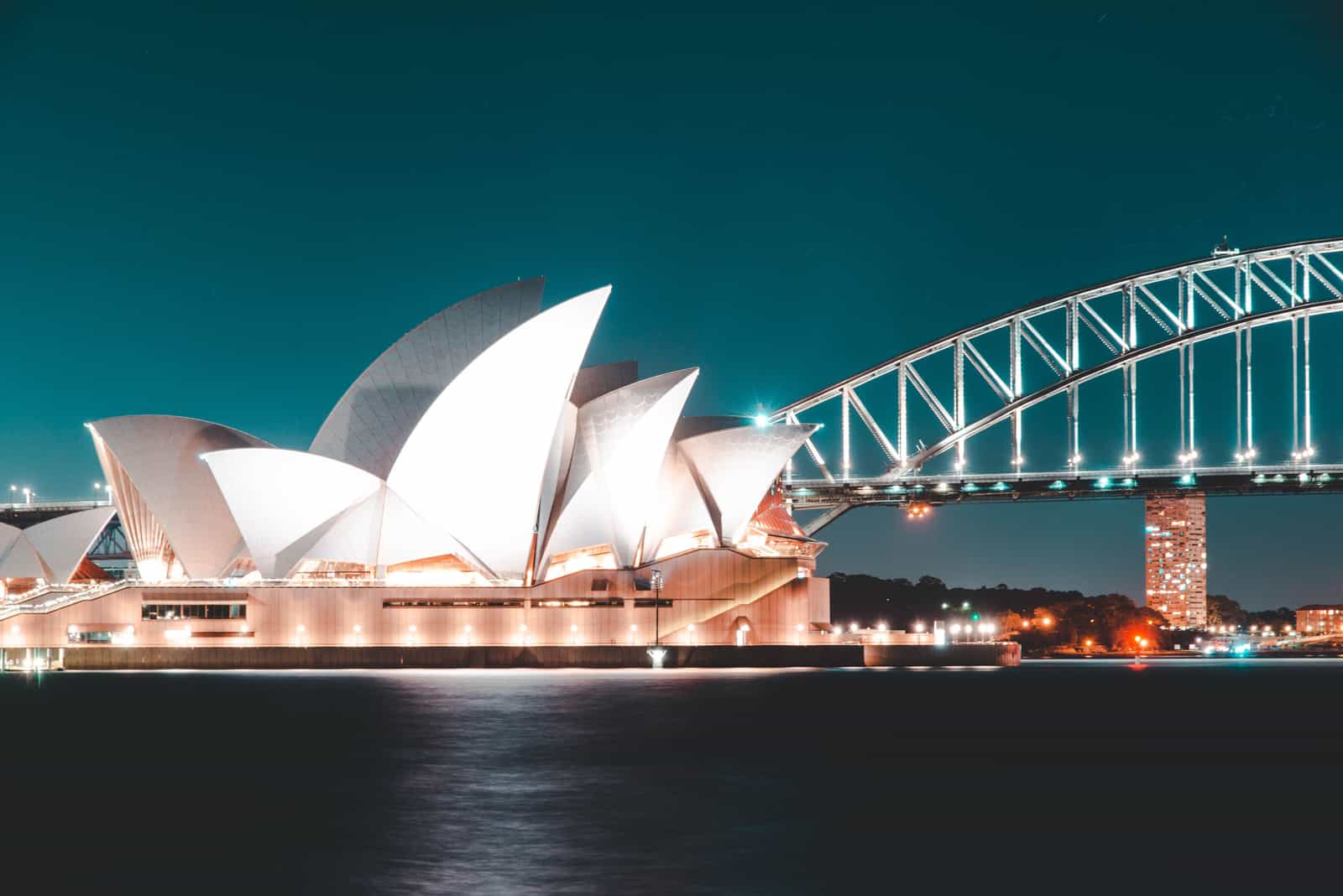
- Sydney Opera House & Harbour Bridge
- Great Barrier Reef
- Uluru (Ayers Rock)
- National Parks: Kakadu, Blue Mountains, Daintree...
- Iconic Beaches: Bondi, Whitehaven, Surfers Paradise
Off the beaten path
- Tasmania: Wild nature and exceptional hikes.
- Wine Regions: Barossa Valley, Margaret River.
- Outback: Road trip on the Stuart Highway, discovery of Aboriginal communities.
Activities by interests
- Surfing, sailing, diving
- Hiking, mountain biking, climbing
- Australian sports (AFL, rugby, cricket)
- Cultural life: Museums, galleries, concerts
7. Safety Tips
Areas to Avoid
- Certain areas of large cities at night (like everywhere), isolated or poorly lit neighborhoods.
- Nature: Beware of dangerous animals (snakes, spiders, jellyfish), follow local guidelines.
Common Scams
- Fake housing owners (always visit before paying a deposit)
- Overly attractive job offers (verify the companies)
- Phone or online scams (as in many countries)
Emergency Numbers
- 000: Police, ambulance, and fire emergencies (national single number)
- Consular assistance: Contact your embassy in case of serious problems.
8. Detailed Budget
Average Costs
| Expenses | Average Monthly Cost (AUD) |
|---|---|
| Shared rent | 800 - 1,500 |
| Solo apartment rent | 1,500 - 2,500 |
| Food | 400 - 600 |
| Transportation | 120 - 180 |
| Phone/Internet | 50 - 80 |
| Health insurance | 80 - 180 |
| Leisure | 150 - 300 |
Money-saving tips
- Shared accommodation: Significantly reduces housing costs.
- Shopping at markets and discount supermarkets.
- Public transportation: Weekly or monthly passes.
- Home-cooked meals instead of dining out.
- Buying a used car if mobility outside major cities is needed.
Cards and Payments
- International bank cards: Widely accepted.
- Opening a local bank account: Recommended to avoid currency exchange fees and facilitate paying local bills.
Conclusion
Australia in 2026 offers an exceptional environment for expatriates, combining professional opportunities, cultural diversity, and quality of life. A successful expatriation relies on thorough preparation, the right visa selection, active integration, and rigorous budget management. Dare to take the leap: Australia has so much to offer to those willing to invest fully. Safe travels to your new life under the Australian sun!
Indicative information, drawn from official sources and Wikipedia, and updated automatically. Rules change: confirm with the embassy or the official portal before booking. Our methodology
We may earn a commission if you buy through these links, at no extra cost to you.
Sri Lanka ETA 2026: free visa for Europeans, how to apply and extend
Tanzania and Zanzibar visa 2026: e-Visa, visa on arrival, fees and mandatory insurance
Cambodia visa 2026: e-Visa, visa on arrival and the e-Arrival form
Egypt visa 2026: e-Visa, visa on arrival and the Sinai exception
Indonesia visa 2026: Bali e-VOA, visa on arrival and C1 e-Visa

Visa appointment in Egypt (2026): VFS, TLScontact, BLS, which centre for which country
Visa appointment in Kenya (2026): VFS, TLScontact, BLS, which centre for which country
Visa appointment in Ghana (2026): VFS Global, BLS, US Embassy, which centre for which country
Visa appointment in Nigeria (2026): VFS, TLScontact, BLS, which centre for which country
Visa alerts and regulations
Receive the latest visa updates and travel advice
We will never share your email. Unsubscribe at any time.