Table of contents
Author: Équipe IziVisasLast update: Oct 2026Reading time: 8 minWritten with AI assistance: our method
Summary
Dubai, with its economic vitality, sunny climate all year round, and safety, attracts thousands of expatriates from around the world each year. Whether to boost one's career, enjoy attractive tax benefits, or embark on a new adventure, the city positions itself as a premier destination in 2026.
Introduction
Dubai, with its economic dynamism, year-round sunny climate, and safety, attracts thousands of expatriates from around the world every year. Whether to boost their career, benefit from attractive taxation, or embark on a new adventure, the city positions itself as a top destination for 2026. This guide is aimed at all those considering settling in Dubai, regardless of their nationality, and aims to provide a comprehensive, practical, and detailed overview to successfully expatriate. For a first scouting trip, check the UAE entry requirements for your passport and our Gulf e-Visa comparison.
1. Travel Preparation
Required Documents
To expatriate to Dubai, it is essential to:
- Possess a valid passport (valid for at least 6 months after the planned entry date).
- Provide several recent passport-sized photos.
- Prepare an employment contract or proof of investment depending on the type of visa chosen.
- Fill out the official visa application form.
- Undergo a medical examination (blood test and chest X-ray).
- Obtain an Emirates ID (resident identity card), issued after arrival once the medical check and biometric data have been recorded.
Note: Before leaving your home country, verify the specific tax and administrative exit procedures for your nationality. Tax residence rules vary by country (France, UK, Canada, Australia, etc.): check with your tax authority before leaving to avoid double taxation or administrative complications later.
Which residence visa in 2026?
- Standard work visa: sponsored by the employer, usually valid for 2 years and renewable.
- Golden Visa (10 years): self-sponsored long-term residency for investors (notably real estate from AED 2 million), entrepreneurs, and talents. The ICP sets no minimum down payment for the property route: the property can be financed with a loan from an approved local bank. Holders can sponsor their spouse, children, and parents.
- Green Visa (5 years): self-sponsored, for freelancers and self-employed professionals holding a freelance permit (MOHRE), with a degree and proof of self-employment income of at least AED 360,000 per year over the previous two years.
- Remote Work Visa (virtual working programme): 1 year, renewable, to work remotely from Dubai for an employer or company based abroad, with a minimum income of around USD 3,500/month and health insurance covering the UAE. To compare with other countries, see our digital nomad visa guide.
Vaccinations and Health
No mandatory vaccinations are required for travelers coming from Europe or America. However, it is recommended to be up-to-date with universal vaccines: diphtheria, tetanus, poliomyelitis, whooping cough, hepatitis B. A medical check-up is mandatory for obtaining a residence visa (HIV testing, tuberculosis screening).
Health insurance: International health insurance is strongly advised, as medical costs in Dubai can be high. Many employers offer coverage, but check the scope of guarantees thoroughly before departure.
Budget to Consider
The budget for settling in Dubai varies depending on the profile, living standards, family size, etc. Consider:
- Official visa fees (ICP schedule): AED 400 to 1,000 for a work visa, AED 300 to 800 for the Remote Work Visa, AED 700 to 1,300 for a Green Visa and AED 1,200 to 2,300 for a Golden Visa, excluding the medical test, insurance, service centre fees and refundable deposits.
- Airfare: 300 to 900 € depending on the season and departure point.
- Deposit and first rent: 10,000 to 40,000 AED depending on accommodation.
- Setup costs (furnishings, subscriptions, transportation, etc.): 5,000 to 15,000 AED.
Plan for a financial cushion equivalent to a minimum of 3 months of expenses to secure the transition.
2. Practical Information
Best time to visit
- Ideal climate: From November to March, with pleasant temperatures (20-28°C), low humidity, clear skies.
- Summer (June to September): Intense heat (up to 45°C), high humidity. Not recommended for first-time settlers, unless for professional reasons.
- Ramadan: Lifestyle changes during this holy month (catering, schedules, social life), to be considered when planning your departure.
How to get there
Dubai is served by two major international airports:
- Dubai International Airport (DXB)
- Al Maktoum International Airport (DWC)
Direct flights are available from most major cities in Europe, Asia, Africa, and North America.
Getting around locally
- Public transportation: State-of-the-art metro, tram, air-conditioned buses, taxis. The Nol card allows access to all public transport.
- Car: Renting or buying a car is common, but beware of heavy traffic during peak hours.
- Mobile apps: Uber, Careem, and other ride-hailing services are widely used.
3. Accommodation
Types of accommodation
- Apartment in a residence (tower, private residence)
- Individual villas or in a compound
- Shared living (especially for young professionals or students)
- Hotels and aparthotels for the first few weeks
Recommended areas
| Area | Highlights | Recommended profile |
|---|---|---|
| Downtown | Center, Burj Khalifa, urban life | Professionals, singles |
| Dubai Marina | Beaches, nightlife, expatriates | Young professionals, couples |
| Jumeirah | Residential, beaches, international schools | Families |
| Business Bay | Near offices, modern | Executives, entrepreneurs |
| Al Barsha | More affordable, near Mall of the Emirates | All profiles |
Budget and reservations
- Studio/1 bedroom: 4,000 to 8,000 AED/month
- 2-3 bedrooms: 8,000 to 20,000 AED/month
- Family villas: 15,000 to 40,000 AED/month
Tips:
- Use reputable agencies.
- Require a written contract.
- Allocate 5% of annual rent for agency fees.
- Negotiate payment in multiple checks (usually 4 to 12).
4. Culture and Traditions
Customs and Practices
- Respect for local traditions: Politeness, discretion, respecting dress codes in public places.
- Religion: Islam is the official religion. During Ramadan, avoid eating, drinking, or smoking in public during the day.
- Behavior: Public displays of affection are discouraged. Alcohol is only permitted in licensed venues.
Language and Communication
- Official language: Arabic
- Common language: English is used everywhere, both in professional settings and daily life.
- Other frequently spoken languages: Hindi, Urdu, Tagalog, Russian, French.
- Tips: Learning a few words in Arabic is always appreciated.
Festivals and Events
- Dubai Shopping Festival (January-February)
- Dubai Food Festival (February-March)
- Eid al-Fitr and Eid al-Adha (major religious festivals)
- Art Dubai (contemporary art fair, April)
- Expo City Dubai (international events and fairs all year round)
5. Gastronomy
Typical Dishes
- Machbous (spiced rice with meat or fish)
- Shawarma (grilled meat sandwich)
- Hummus, falafel, tabbouleh
- Lebanese grilled foods and mezzes
Recommended Restaurants
- Al Fanar Restaurant (traditional Emirati cuisine)
- Zuma (Japanese, Downtown)
- Pierchic (seafood, ocean view)
- Ravi’s (Pakistani, popular with expats)
- Arabian Tea House (local cuisine, Al Fahidi district)
Street Food
Street food is omnipresent, especially in popular neighborhoods and near beaches:
- Shawarmas, falafel, fresh juices, Middle Eastern pastries
- Numerous food trucks and gourmet markets
6. Activities and Sightseeing
Must-see
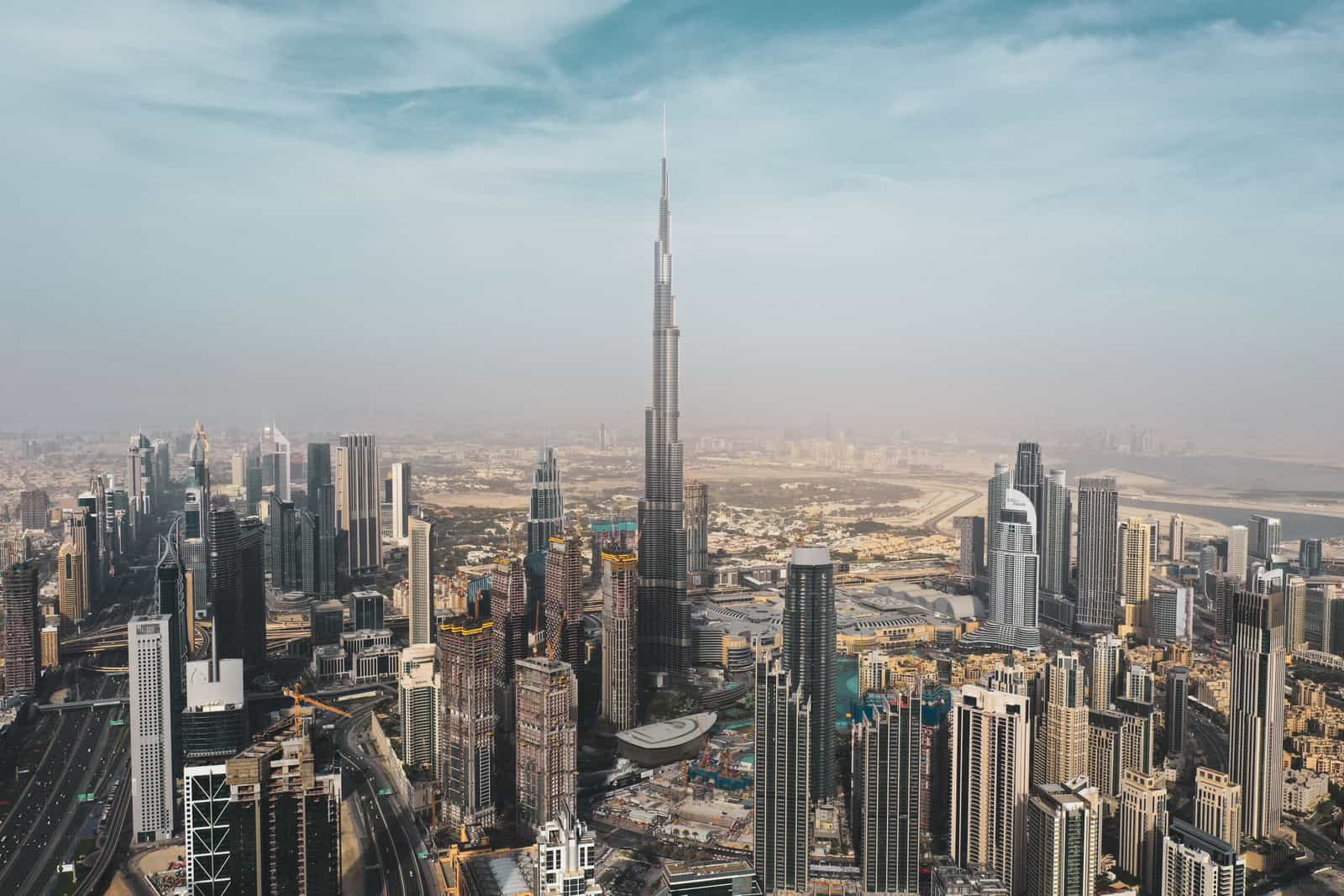
- Burj Khalifa (tallest tower in the world)
- Dubai Mall (shopping, aquarium, ice rink)
- Palm Jumeirah (artificial archipelago, beaches, luxury hotels)
- Dubai Marina (promenade, restaurants)
- Al Fahidi Historic District (museums, traditional souks)
Off the beaten path
- Desert (safari, camping, sandboarding)
- Alserkal Avenue (artistic and creative district)
- Hatta (hiking, kayaking, nature)
- Spice and Gold Souks (Deira)
- Global Village (multicultural park)
Activities based on interests
- Sports: golf, kitesurfing, diving, horse riding
- Family: water parks, Legoland, aquariums, secure beaches
- Nightlife: rooftop bars, clubs, international concerts
7. Safety Tips
Areas to avoid
Dubai is one of the safest cities in the world. Crimes are rare and the police are very present.
- Avoid: Wandering in isolated industrial areas at night, provocative behavior in public.
Common scams
- Fake real estate agents: Always go through authorized agencies.
- Online scams: Verify the authenticity of job or rental offers.
- Fake taxis: Use official taxis or reputable apps.
Emergency numbers
- Police: 999
- Ambulance: 998
- Fire brigade: 997
- International private ambulance: services available via private hospitals
8. Detailed Budget
Indicative Monthly Costs (for a single person)
| Expense | Minimum Budget | Average Budget | Premium Budget |
|---|---|---|---|
| Accommodation | 4,000 AED | 8,000 AED | > 20,000 AED |
| Food | 1,500 AED | 3,000 AED | > 6,000 AED |
| Transportation | 300 AED | 1,000 AED | > 2,000 AED |
| Phone/Internet | 300 AED | 600 AED | 1,000 AED |
| Leisure and outings | 500 AED | 2,000 AED | > 5,000 AED |
| Health/Insurance | 400 AED | 900 AED | 2,000 AED and above |
Tips to Save
- Opt for shared accommodation or living outside the city center.
- Use public transportation or carpooling.
- Take advantage of special offers and happy hours in restaurants.
- Shop at hypermarkets (Carrefour, Lulu) rather than small convenience stores.
- Purchase a local SIM card with unlimited data.
Cards and Payments
- Most payments are made by bank card (Visa, Mastercard).
- Contactless payment is widespread.
- Keep some cash (dirhams) for small purchases.
- Quickly open a local bank account (issuing a card within a few days after obtaining the Emirates ID).
Conclusion
Moving to Dubai in 2026 means choosing a cosmopolitan, safe city focused on the future. With good preparation, an open mind, and a willingness to integrate, the adventure is within everyone’s reach, regardless of their country of origin. Don’t hesitate to seek professional support for the most technical steps, and embark on this unique experience in the heart of the Middle East. Best of luck settling in Dubai!
Indicative information, drawn from official sources and Wikipedia, and updated automatically. Rules change: confirm with the embassy or the official portal before booking. Our methodology
We may earn a commission if you buy through these links, at no extra cost to you.
Sri Lanka ETA 2026: free visa for Europeans, how to apply and extend
Tanzania and Zanzibar visa 2026: e-Visa, visa on arrival, fees and mandatory insurance
Cambodia visa 2026: e-Visa, visa on arrival and the e-Arrival form
Egypt visa 2026: e-Visa, visa on arrival and the Sinai exception
Indonesia visa 2026: Bali e-VOA, visa on arrival and C1 e-Visa

Visa appointment in Egypt (2026): VFS, TLScontact, BLS, which centre for which country
Visa appointment in Kenya (2026): VFS, TLScontact, BLS, which centre for which country
Visa appointment in Ghana (2026): VFS Global, BLS, US Embassy, which centre for which country
Visa appointment in Nigeria (2026): VFS, TLScontact, BLS, which centre for which country
Visa alerts and regulations
Receive the latest visa updates and travel advice
We will never share your email. Unsubscribe at any time.