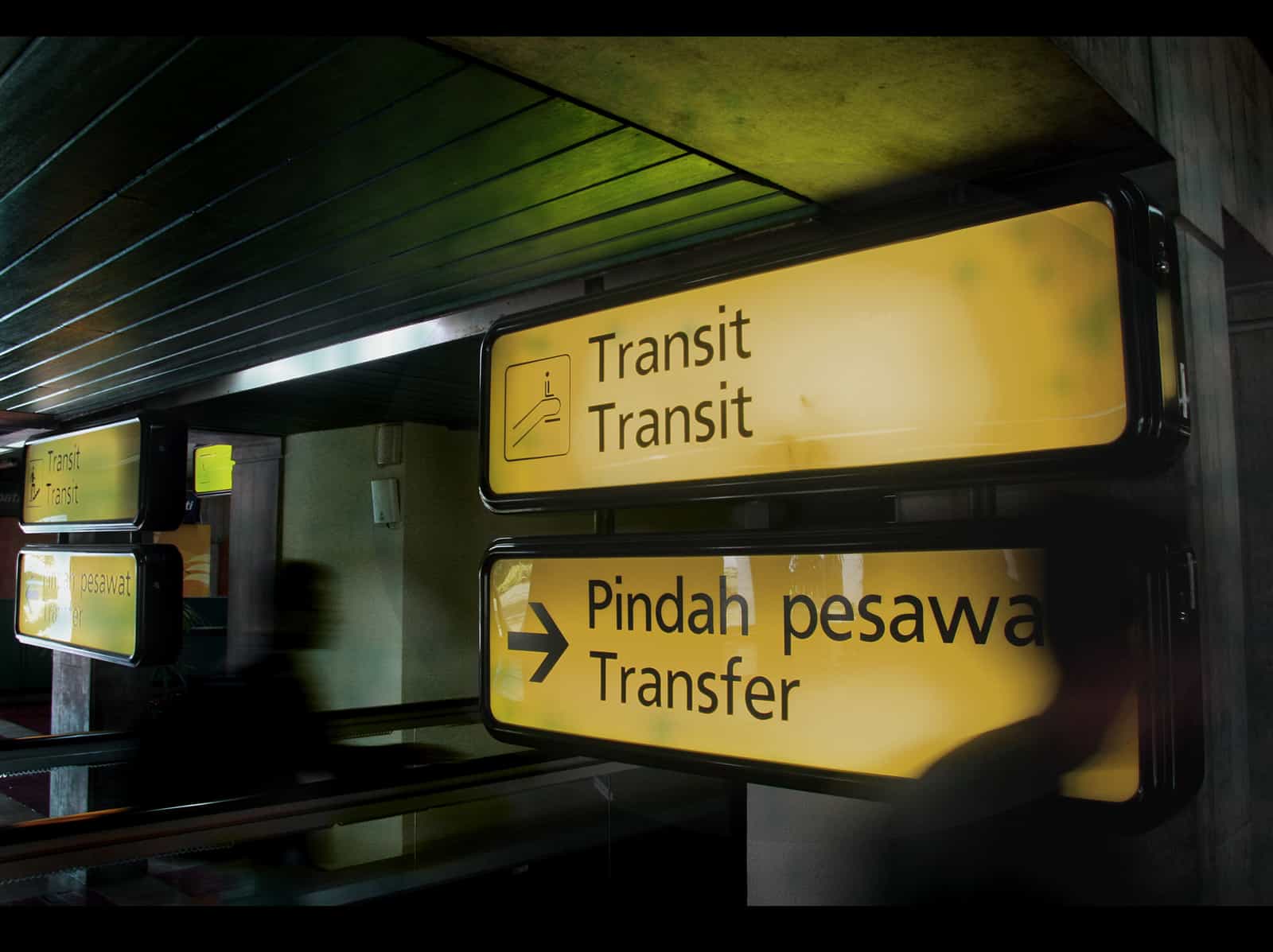
 Photo: anung / Pexels
Transit visa 2026: when a simple layover requires a visa
Table of contents
Author: Équipe IziVisasReviewed on October 28, 2026Last update: Oct 2026Reading time: 7 minWritten with AI assistance: our method
Summary
Staying airside and crossing immigration are not governed by the same rules. When a transit visa becomes mandatory, the Schengen case, the US case, and the five points to check before booking.
Many travellers discover that transit visas exist at the check-in desk, when the airline refuses to board them. It is one of the few points of visa regulation that plays out before take-off, and one of the least understood.
The rule comes down to one question: will you cross the immigration control of the country you are stopping in?
Two very different layovers
A layover is either airside, staying in the international zone with no immigration control, which needs no visa in most countries but not in all, or landside, where the stopover country's ordinary entry rules apply in full.
Airside transit. You land, you stay in the airport's international zone, you fly on. You cross no immigration control. In most countries no visa is required in this case, but not in all of them, and that is exactly where the trap lies.
Landside transit. You collect your baggage, you change terminal or airport, you leave, you sleep at a hotel. You cross immigration control: the country's ordinary entry rules apply in full, exactly as if it were your final destination.
So the first useful reflex is to work out, for each stop, which of those two situations you are in. The answer does not depend on how long the layover is, but on the airport's layout and on your ticket.
When a transit visa becomes mandatory
A transit visa becomes mandatory in three cases: your nationality is subject to the airport transit visa of the stopover country, you leave the international zone, or the country has no international transit zone, as in the United States.
Three main cases:
The country subjects certain nationalities to an airport transit visa. Even without leaving the international zone, nationals of some countries must obtain a specific visa. Such lists exist in several jurisdictions, they are set nationality by nationality, and they change.
You leave the international zone. As soon as you cross immigration, the ordinary entry regime applies: either you are exempt, or you need the short-stay visa of the country you are stopping in.
The country simply has no international transit zone. The United States is the notable case: every traveller stopping on US soil goes through immigration, even for an immediate connection. A valid transit visa or electronic travel authorisation is therefore required, with no exemption for a short layover. ESTA is open only to the 42 Visa Waiver Program countries, none of them African, and since 1 January 2026 Proclamation 10998 has suspended all visas, transit included, for nationals of 19 countries, including Burkina Faso, Mali, Niger, Chad and the Republic of the Congo: if this applies to you, barring an exception (visa still valid on 1 January 2026, dual nationality with a passport not covered), choose a route with no stop in the United States. Canada applies a comparable logic, with specific programmes open to certain nationalities under conditions.
The Schengen case
The Schengen airport transit visa applies only to certain nationalities: the common list covers 12 countries, including Ghana, Nigeria, Ethiopia and the Democratic Republic of the Congo, and France adds others such as Cameroon, Côte d'Ivoire and Senegal.
The Schengen area provides for an airport transit visa distinct from the short-stay visa. It allows passage through the international zone of an airport in the area, without giving access to the territory.
Two points matter:
- It concerns only certain nationalities, set out in a common list to which several states add their own requirements. The common list covers 12 countries: Afghanistan, Bangladesh, the Democratic Republic of the Congo, Eritrea, Ethiopia, Ghana, Iran, Iraq, Nigeria, Pakistan, Somalia and Sri Lanka. For transit through its airports, France adds a national list that includes Angola, Cameroon, the Central African Republic, Chad, the Congo, Côte d'Ivoire, Guinea, Mali, Mauritania, Senegal, Sierra Leone, Sudan and South Sudan (full list on france-visas.gouv.fr). Two stops in two different Schengen countries can therefore follow different rules.
- It does not allow you to leave the airport. If your connection requires collecting baggage, changing airport or spending the night in town, you need a short-stay visa, not a transit visa.
The United Kingdom case
The UK requires an authorisation from certain nationalities even to remain airside, and visa-exempt travellers need an ETA costing GBP 20 as soon as they pass immigration control, even when only in transit.
The UK likewise distinguishes transit without passing immigration from transit with entry into the territory, and requires an authorisation from certain nationalities even to remain airside. Here too, the rule depends on nationality and on the shape of the itinerary. Visa-exempt travellers also need an ETA (GBP 20) as soon as they pass immigration control, even when only in transit.
The situations that catch people out
Baggage not checked through to the destination. If your bags are not tagged to the final arrival point, you will have to collect them at the layover, so cross immigration, so fall under the ordinary entry regime. This is the most common trap, and it can be checked when buying the ticket.
Two separate tickets instead of one. With two distinct bookings there is no connection in the airline sense: you exit and check in again. Airside transit no longer exists.
Changing airport. Moving from one airport to another in the same city obviously means leaving. An ordinary entry, then.
A long layover. Beyond a certain number of hours, staying in the international zone can become impractical, depending on the airport's facilities and opening hours. A ten-hour layover that looks comfortable on paper can force you out.
A diverted or cancelled flight. An unplanned stop falls under exceptional procedures handled by the airline and local authorities, but it can leave you somewhere without the required document.
What to check before booking
Before booking a flight with a layover, check five points: whether your nationality needs a transit visa in each stopover country, baggage checked through to the destination, a single ticket, a same-terminal connection and an open transit area.
- Whether your nationality requires a transit visa in each country you stop in, not only in the destination country.
- Whether your baggage is checked through to the end of the journey. Ask explicitly, and confirm at the check-in desk.
- Whether it is a single ticket or separate bookings.
- Whether the connection is in the same terminal, and if not, whether the transfer stays airside.
- Whether the schedule leaves the transit area open when you pass through.
Those five questions cover the most common causes of transit-related boarding refusals.
Fee and processing time
The Schengen airport transit visa costs €90, the same as a short-stay visa, and the US C-1 transit visa USD 185; in the UK, the Visitor in Transit visa costs GBP 74.50, and Canada's transit visa is free.
A transit visa is not always cheaper than a short-stay visa: in the Schengen area, the airport transit visa costs the same (€90), and the US C-1 transit visa costs as much as a B1/B2 (USD 185); it is cheaper in the UK (GBP 74.50 for the Visitor in Transit visa, against GBP 135 for a visitor visa) and free in Canada. It remains a full application: form, supporting documents, sometimes biometrics. Do not count on getting one the day before departure.
Fees and processing times vary from country to country, and, within one country, from nationality to nationality.
Check the rule that applies to you
Lists of nationalities subject to transit visas change, and an out-of-date list on this subject makes people miss flights. Apart from the common Schengen list and the French list above, none is reproduced here for that reason: check the regime that applies to your passport for each country you stop in, with its consular representation or official portal, before buying your ticket.
Your airline is a useful source too: it is the one that pays the fine if it boards you without the required document, so it checks this point carefully.
Indicative information, drawn from official sources and Wikipedia, and updated automatically. Rules change: confirm with the embassy or the official portal before booking. Our methodology
Plan your trip
We may earn a commission if you buy through these links, at no extra cost to you.
Similar guides

Sri Lanka ETA 2026: free visa for Europeans, how to apply and extend

Tanzania and Zanzibar visa 2026: e-Visa, visa on arrival, fees and mandatory insurance

Cambodia visa 2026: e-Visa, visa on arrival and the e-Arrival form

Egypt visa 2026: e-Visa, visa on arrival and the Sinai exception

Indonesia visa 2026: Bali e-VOA, visa on arrival and C1 e-Visa

Visa appointment in Egypt (2026): VFS, TLScontact, BLS, which centre for which country
Visa appointment in Kenya (2026): VFS, TLScontact, BLS, which centre for which country
Visa appointment in Ghana (2026): VFS Global, BLS, US Embassy, which centre for which country
Visa appointment in Nigeria (2026): VFS, TLScontact, BLS, which centre for which country
Visa alerts and regulations
Receive the latest visa updates and travel advice
We will never share your email. Unsubscribe at any time.