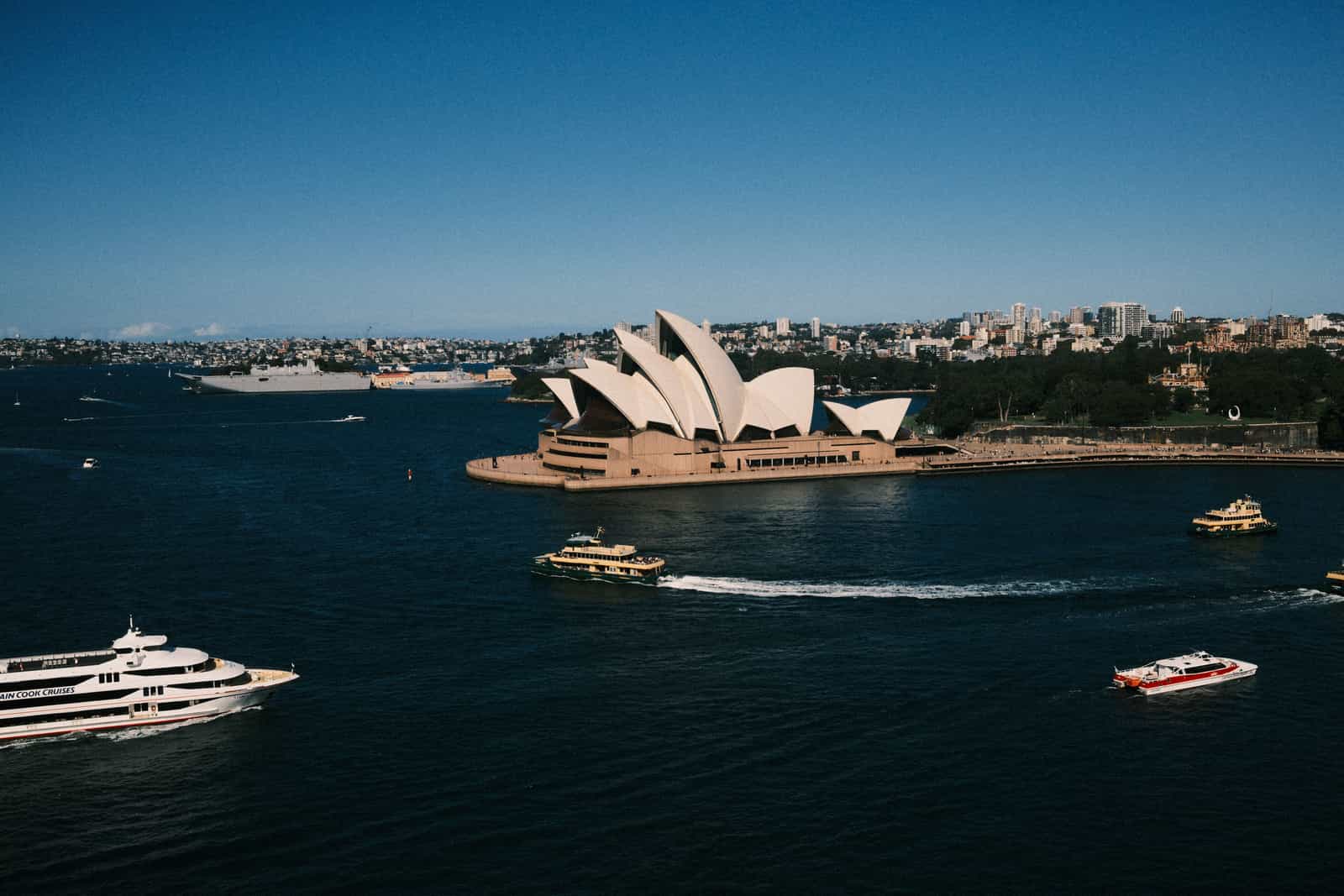
Australia Tourist Visa from Latin America (2026)
Table of contents
Author: IziVisas teamLast update: Nov 2026Reading time: 8 minWritten with AI assistance: our method
Summary
Mexicans, Colombians, Bolivians, Dominicans… No Latin American passport can use the ETA: all apply for the Visitor visa 600 in ImmiAccount. Fee, stay, documents and processing according to Home Affairs.
To visit Australia as a tourist on a Latin American passport, you need a visa before you leave: no passport from the region can use the ETA electronic authority or the eVisitor. The application is online, with no consulate appointment, but it calls for a solid file. This guide sets out what the Australian Department of Home Affairs publishes, as read on 1 November 2026.
Key points
Latin American tourists need the Visitor visa (subclass 600), Tourist stream, applied for online in ImmiAccount from outside Australia; it costs from 250 Australian dollars and usually comes with a 3-month stay.
- Visa required: Visitor visa (subclass 600), Tourist stream, applied for from outside Australia.
- Where: online, in ImmiAccount, the Home Affairs platform. The visa is linked to your passport digitally: no label is put in it.
- Price: from AUD 250 per applicant, according to Home Affairs (read on 1 November 2026), plus health checks or biometrics if requested.
- Stay: generally 3 months; Home Affairs may grant up to 12 months in some cases. The grant letter sets the length; you do not choose it.
- Processing: Home Affairs publishes no fixed timeframe; its processing time tool shows the times for recently decided applications.
Which visa for your passport?
No Latin American passport is on the lists for the ETA or the eVisitor: all of them go through the Visitor visa 600, with the same online process and the same fee.
The ETA (subclass 601) is open only to passports from Brunei, Canada, Hong Kong, Japan, Malaysia, Singapore, South Korea, Taiwan and the United States, and the eVisitor (subclass 651) to European passports. For everyone else, including every Latin American country, the tourist route is the Visitor visa 600.
Dual nationals: what counts is the passport you travel on. If you also hold a Spanish or Italian passport, for example, you can apply for the eVisitor with it, and with a US passport, the ETA. Then travel on the passport you applied with.
How much it costs
The Visitor visa 600 costs from AUD 250 per applicant, paid in ImmiAccount; each family member lodges a separate application and pays a separate fee.
- Visa fee: from AUD 250 per applicant (Home Affairs, Tourist stream page, read on 1 November 2026).
- One application per person: you cannot include family members in your application. Each of them, including children listed on a parent's passport, lodges their own.
- Possible extra costs: health checks and biometrics, if Home Affairs asks for them.
- Exact amount: Home Affairs points to its Visa Pricing Estimator, which does not include those extra costs.
How long you can stay
Home Affairs says it generally grants a 3-month stay and may grant up to 12 months in certain circumstances; the exact period is in your grant letter.
The authorised stay and the number of entries are shown in the grant letter. With a single-entry visa, leaving Australia means applying for a new visa to come back; with multiple entry, you can leave and return while the visa is valid. This visa cannot be extended in Australia: to stay longer, you must apply for another visa.
It covers tourism, visiting family or friends, a cruise and up to 3 months of study, but you cannot work. A round-trip cruise counts as time spent in Australia: it does not reset your stay period.
How to apply in ImmiAccount
The whole application is online in ImmiAccount, from outside Australia: create the account, fill in the subclass 600 form, attach scanned documents and pay the fee.
- Check your passport. It must be valid. If you plan to renew it, do so before you apply, because the visa is linked to that passport.
- Create an account or log in to ImmiAccount (online.immi.gov.au).
- Choose the Visitor visa (subclass 600), Tourist stream, applying from outside Australia.
- Fill in the form and attach your documents, scanned or photographed in colour and legible.
- Pay the fee online.
- Health checks and biometrics: you can have the health examinations before you apply or wait until Home Affairs asks.
- Wait for the decision outside Australia: you must be outside the country when you apply and when the decision is made.
If Home Affairs asks for more documents, attach them in ImmiAccount as soon as you can. Also report any change of phone number, address or passport while your application is open.
Documents to attach
Home Affairs asks you to include as much information as possible: passport pages, national identity card, 3 months of bank statements, an employer letter and, for minors, the consent forms.
To grant the visa, Home Affairs must be satisfied that you are a genuine visitor. The list it publishes for the Tourist stream:
- Identity: the pages of your current passport showing your photo, personal details and issue and expiry dates; your national identity card, if you have one.
- Funds: itemised personal bank statements for the last 3 months. If someone else is paying for the trip, proof of their funds.
- Ties: a letter from your employer stating that you plan to return to your job.
- Under 18s: Form 1229 (consent to grant an Australian visa to a child) signed by the parents who are not travelling, or a statutory declaration; Form 1257 (undertaking declaration) if the child is not staying with a relative or legal guardian.
- Translations: any document not in English is translated into English and attached with the original. Translators outside Australia do not need accreditation, but must state their details and their experience in the language, in English.
Processing times
Home Affairs publishes no fixed timeframe for the Visitor visa 600: its online tool shows the times for recently decided applications, as a guide only.
The visa processing time guide shows how long decided applications took; Home Affairs stresses that it is only a guide and not specific to any one application. In practice:
- apply early and, ideally, before you buy your flight;
- attach every document from the start: an incomplete file means Home Affairs has to ask for more and the wait gets longer;
- do not travel before you receive your grant letter.
Health insurance
Home Affairs reminds visitors that they pay all their own healthcare costs in Australia and strongly recommends adequate health insurance; in some cases the visa carries condition 8501, which makes it mandatory.
In some cases, Home Affairs grants the visa with condition 8501 (maintain adequate health insurance for the whole stay). Australia has reciprocal healthcare agreements with a few countries, listed by Home Affairs. Travel insurance covering medical costs and repatriation for the whole stay avoids an unpleasant hospital bill.
Before you book
Check which passport you travel on, lodge one application per person, keep your grant letter and check the transit rules of any stopover country.
- The passport: the same one for the application and for the trip.
- The official application: it is lodged in ImmiAccount. You can do it yourself; an assistance service charges its own fee on top of the official one.
- Stopovers: a flight via another country may require a visa or transit authorisation from that country. Check the stopover page on IziVisas before booking.
- Timing: compare with our passport and route pages, linked in the table above.
Sources
Data read on 1 November 2026.
- Home Affairs, Visitor visa (subclass 600), Tourist stream (apply outside Australia): fee, stay, documents, insurance, processing.
- Home Affairs, Electronic Travel Authority (subclass 601): eligible passports.
- Home Affairs, eVisitor (subclass 651): European passports only.
- IziVisas catalogue for Australia (Visitor visa 600, ETA and eVisitor), the basis of our route pages.
Indicative information, drawn from official sources and Wikipedia, and updated automatically. Rules change: confirm with the embassy or the official portal before booking. Our methodology
Plan your trip
We may earn a commission if you buy through these links, at no extra cost to you.
Similar guides

France Family Visit Visa 2026: Attestation d'Accueil, Documents

Schengen Visa Refusal Rates 2025 in Algeria, Morocco, Tunisia and Egypt, Country by Country

Armenia Visa 2026: e-Visa, Fee, Processing Time, Who Needs One
Singapore Visa from Tunisia and Morocco (2026)
Albania Visa from Algeria, Tunisia and Morocco (2026)

Schengen Visa for Ecuadorians, Dominicans and Bolivians (2026)

Arab World Passport Ranking 2026: the IziVisas Barometer

Latin American Passport Ranking 2026: the IziVisas Barometer
Visa alerts and regulations
Receive the latest visa updates and travel advice
We will never share your email. Unsubscribe at any time.